Posts Archive

Posts 

A curated archive of posts on computational materials science, scientific programming, high-performance computing, conferences, and professional development.

9 posts 2011-2016 HPC · DFT · Python · Materials
BLOG

All Posts

ComputationProgrammingHPCMaterials InformaticsConferenceCareer
VASP workshop

VASP Workshop

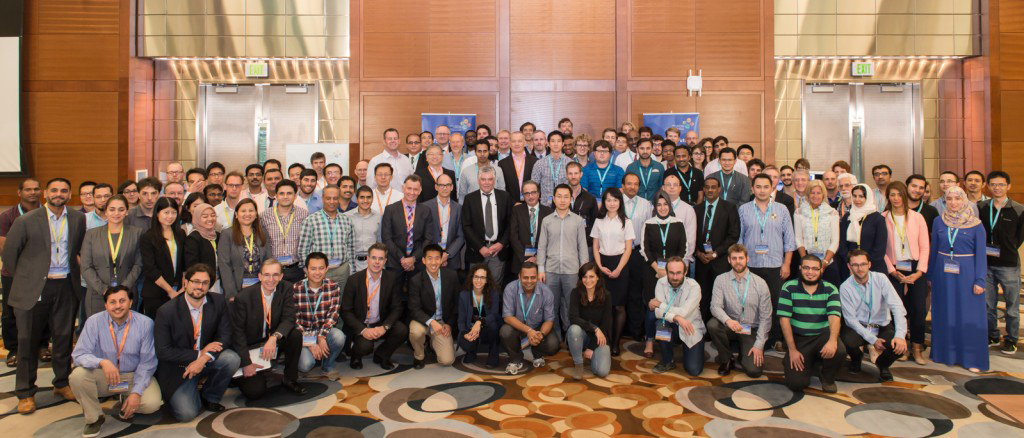
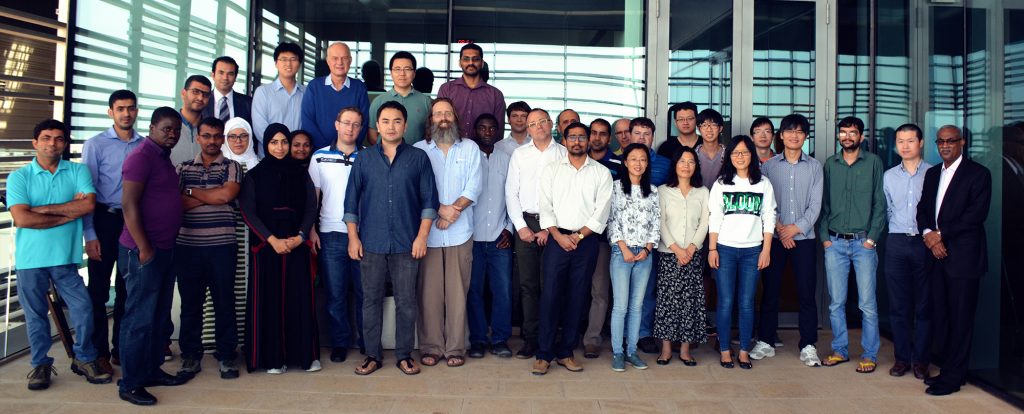
We just had a great 2-day workshop on the Vienna Ab-initio Simulation Package (VASP) organized by KAUST Research Computing from May 10 to 11, 2016. The workshop featured lectures and hands-on tutorials by Dr. Martijn Marsman, one of the main developers of VASP, from the VASP team in Vienna. This was not an introductory workshop; it focused on advanced VASP features such as hybrid functionals, linear response, GW, BSE, and ACFDT (RPA).

At KAUST, there are three research groups that use VASP heavily: Computational Physics and Materials Science (CPMS), Solar & Photovoltaics Engineering Research Center (SPERC), and KAUST Catalysis Center (KCC). Among these groups, I think we at CPMS use VASP the most, with 24 seats.

Similarly, last year we had a 2-day workshop on VASP and the MedeA® modeling suite from March 11 to 12, 2015. The first day introduced the fundamentals of VASP, and the second day focused on hands-on tutorials with MedeA®, structure databases, graphical building and analysis tools, and integrated solvers such as VASP-TTS, LAMMPS, GIBBS, and MOPAC.

VASP is a computer program for atomic scale materials modeling, electronic structure calculations, and quantum-mechanical molecular dynamics from first principles. It computes approximate solutions to the many-body Schrödinger equation within density functional theory or Hartree-Fock, and includes hybrid functionals, GW quasiparticles, ACFDT-RPA, and many-body perturbation theory.

Read post
Git and GitHub

Git and GitHub

Few years ago I switched from SVN to Git and haven’t looked back. Git is a free and open source distributed version control system widely used for software development and version control tasks. It is known for speed, efficiency, reliability, and a non-linear development model.

Git has become one of the most popular version control systems among open-source developers, making it a necessary tool for professional programmers, freelance coders, and computational scientists. I have used Git for scientific research code in Python, Bash, and Fortran, and for personal CSS and PHP scripting. When this website crashed due to a CSS stylesheet problem, Git let me instantly retrieve the previous version.

GitHub is the largest Git repository hosting service and provides a web-based interface and desktop app. It is the central hub of collaboration for millions of projects and developers. Although I mostly use command-line Git, GitHub’s interface and desktop app can make Git life easier.

Resources
  • Pro Git Book
  • Udacity: How to Use Git and GitHub
  • Ry’s Git Tutorial
  • Understanding Git Conceptually
  • A Visual Git Reference
  • Git Cheat Sheet from GitHub
Notable Mentions
  • BitBucket
  • Atom
  • Gitignore.io
Read post
Python logo

Learning Python: A Short Guide to Jump Start

Python is a powerful general-purpose, object-oriented language. It is easy to learn and used for games, web development, applications, data analysis, and academic research. Although many scientists use Fortran or C, I think the current generation is leaning toward Python.

Personally, the best way to learn Python is to start using it for a project, solve a problem with it, or rewrite code from another language in Python. However, you have to start by learning the grammar, syntax, and basics first.

Learning Resources
  • Codecademy Python Class
  • Google’s Python Class
  • Learn Python the Hard Way
  • The Python Tutorial
  • LearnPython.org
IDEs & Tools
  • Spyder with Anaconda
  • Anaconda with NumPy, Pandas, SciPy, Matplotlib, and IPython
  • Jupyter
  • PyCharm
  • Emacs
Read post
KAUST Solar Future meeting

Solar Future 2015

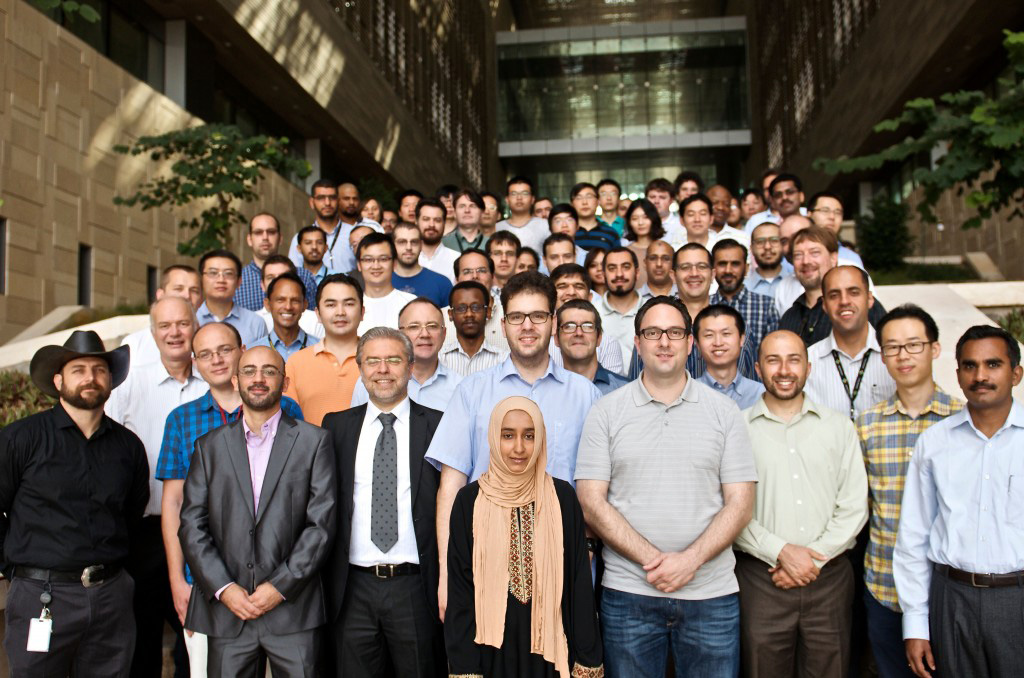
I recently attended the Solar Future 2015 symposium organized by KAUST from November 7 to 11. Solar Future 2015 is KAUST’s scientific and technology symposium on solar energy, gathering international experts from academic and industrial communities to share their vision and recent results in solar energy conversion.

Three days of keynote presentations and networking opportunities made this symposium an exclusive event with worldwide impact. About twenty institutions from Europe, the USA, and Asia were represented, including national laboratories and universities such as Stanford, Princeton, and EPFL.

One of my current projects deals with first-principles investigations of hybrid organic-inorganic perovskite solar cells, so the talks related to this rapidly emerging field were the most interesting for me. Dr. Tomas Leijtens from Stanford discussed stable and efficient hybrid tandem solar cells using metal halide perovskites, while Dr. Sam Stranks from MIT discussed perovskite photophysics, charge carrier diffusion, recombination, ion migration, and hysteresis.

Read post
Psi-k conference

Ψk-2015 Conference

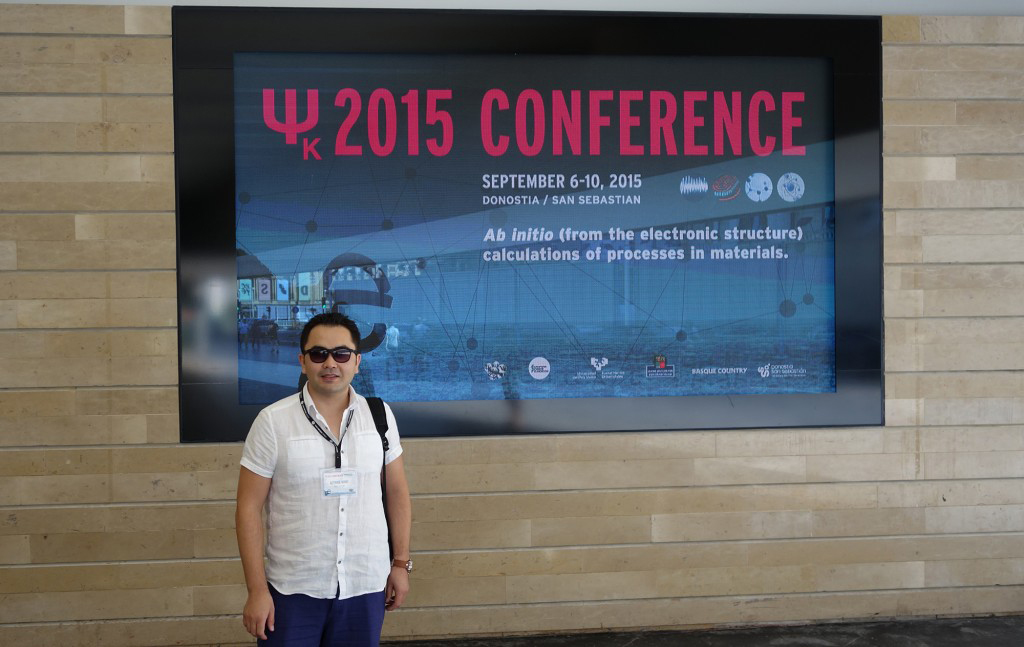
I have just returned from attending the Ψk-2015 Conference and it was a blast. Every five years this conference brings together the global community active in electronic structure and properties of condensed matter. Ψk-2015 took place in San Sebastian, Spain, from September 6 to 10, with around 30 symposia, 160 invited speakers, and more than 1200 participants.

Focus Sessions
  • Hybrid Photovoltaic Materials
  • Transport Properties
  • Materials Design
  • Modeling of Defect Levels
  • GW and BSE
  • Novel 2D Materials and Heterostructures
  • Machine Learning Methods in Materials Modeling
  • Spin-Orbit Coupling Effects in First-Principles Quantum Transport

My contribution was about our recent work, “Mechanism of H2O induced conductance changes in AuCl4 functionalized CNTs.” The plenary sessions by Prof. Giulia Galli, Prof. Georg Kresse, and Prof. Steve Louie were motivating and full of new insights.

Useful Talks
  • Kristin Persson: The Materials Project
  • Andrew M. Rappe: Shift Current and Ferroelectric Domain Walls
  • Boris Kozinsky: Ionic and Electronic Conductors
  • Chris Wolverton: Materials Genome Approach
  • Heather Kulik: Large-Scale Electronic Structure and Dynamics
  • Jeffrey Neaton: Charge Transport at the Nanoscale
  • Marco Bernardi: Ultrafast Hot Carrier Dynamics
  • Berend Smit: Nanoporous Materials Genome

I got the impression that the next Ψk-2020 would have more sessions related to data mining and machine learning as essential tools for next-generation materials design and modeling.

Read post
The Materials Project

The Materials Project

I enjoyed Dr. Kristin Persson’s talk on The Materials Project: Accelerated Materials Design in the Information Age at Psi-k 2015. The Materials Project, part of the broader Materials Genome Initiative, is an effort to compute properties of known inorganic materials and beyond, and offer that data to the community together with online analysis and design algorithms.

I knew about the Materials Project back in 2012. During my Ph.D. study I had to spend several weeks calculating and estimating stable phase diagrams of complex oxides such as InGaZnO4 by writing my own MATLAB code, but thanks to the Materials Project, nowadays one can do it in a very short time.

Dr. Kristin Persson and Prof. Gerbrand Ceder have put tremendous effort into this project. I also think the primary engines powering the Materials Project are made possible by Dr. Shyue Ping Ong (Pymatgen, Custodian) and Dr. Anubhav Jain (FireWorks). The Materials Project will benefit greatly from the advancement of big data and machine learning.

Read post
Shaheen II Cray XC40

Shaheen II: A New Supercomputer

I had the privilege to attend a workshop about our new high-performance supercomputer Shaheen II at KAUST. In May 2015, KAUST acquired and installed a new Cray XC40 supercomputer that delivers 25 times the sustained computing capability of KAUST’s previous system, Shaheen I.

Shaheen II has a theoretical peak performance of 7.2 PFLOP/s and is composed of 6,174 dual-socket compute nodes based on 16-core Intel Haswell processors running at 2.3 GHz, representing a total of 197,568 cores. The processors are integrated with a rich memory hierarchy and dragonfly interconnection network, with 17 PB of total storage in the parallel file system.

The workshop targeted potential Shaheen II users looking forward to porting and running their codes on the new system.

Read post
Transferable skills

Transferable Skills

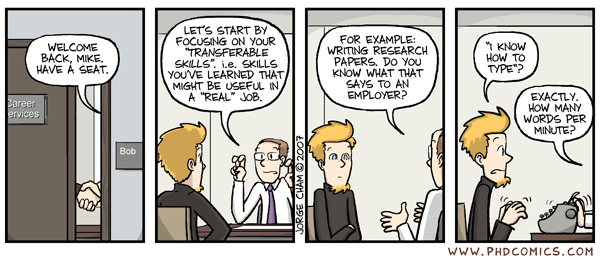
It is not easy for scientists to identify the transferable skills acquired during their academic journey because some soft skills are obvious, while others are hard to spot. Here is a list of transferable skills that most PhDs are equipped with.

Analysis & Problem-Solving
  • Define a problem and identify possible causes
  • Comprehend large amounts of information
  • Form and defend independent conclusions
  • Design an experiment, plan, or model that tests resolutions and implements a solution
Interpersonal & Leadership Skills
  • Facilitate discussions or conduct meetings
  • Motivate others to complete projects
  • Respond appropriately to feedback
  • Mentor subordinates and peers
  • Collaborate on projects
  • Teach skills or concepts to others
Project Management & Communication
  • Manage projects from beginning to end
  • Prioritize tasks while anticipating problems
  • Prepare concise and logical written materials
  • Organize and communicate ideas effectively
  • Explain difficult concepts in basic language
  • Write effective grant proposals

Source: University of Michigan Career Center.

Read post
Quantum ESPRESSO workshop

Quantum ESPRESSO

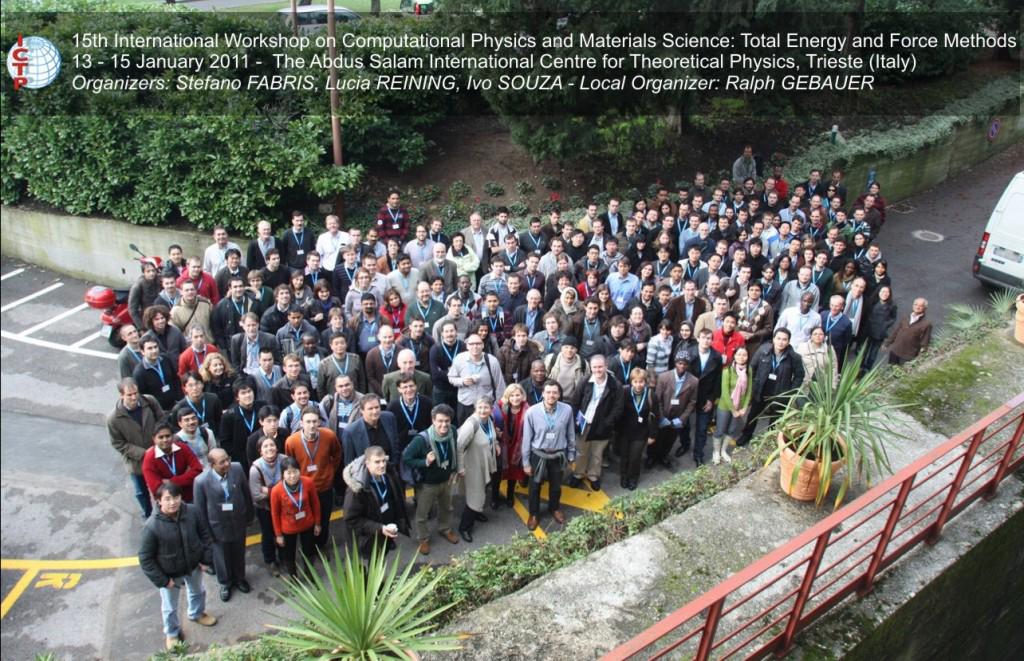
I attended an intensive Quantum ESPRESSO hands-on tutorial and training between January 17 and 21 at ICTP Trieste, Italy. This was part of the 15th International Workshop on Computational Physics and Materials Science: Total Energy and Force Methods. I was awarded a competitive travel grant from the Materials Computation Center at the University of Illinois at Urbana-Champaign to attend this workshop.

The workshop presentations covered theories and methods such as density-functional theory, ab-initio molecular dynamics, and electronic transport. In particular, I benefitted tremendously from the Quantum ESPRESSO hands-on training.

Quantum ESPRESSO is an integrated suite of open-source computer codes for electronic-structure calculations and materials modeling at the nanoscale. It is based on density-functional theory, plane waves, and pseudopotentials.

Quantum ESPRESSO Can Do
  • Ground-state calculations
  • Structural optimization
  • Transition states and minimum energy paths
  • Ab-initio molecular dynamics
  • Response properties
  • Spectroscopic properties
  • Quantum transport
Read post
Interested in collaborating?

Open to research collaborations, consulting, scientific computing workflows, and AI-enabled materials discovery projects.