








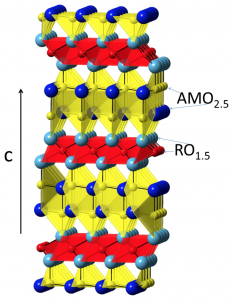
Ph.D. — Computational Quantum Physics
🎓
Education
M.S. — Engineering Management
Emphasis: Global project management, financial engineering & entrepreneurship
B.S. — Computational Physics
UAE President's Gold Medal Award — top graduating student
Research Interests
- Materials Informatics & Big Data Analytics for Materials Research
- AI, Gen AI, Agentic AI & LLMs for materials discovery
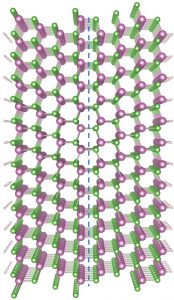
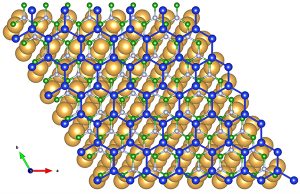
- 2D materials and heterostructures for energy applications and devices
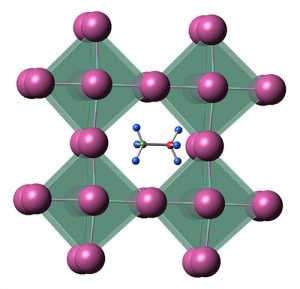
- Hybrid organic-inorganic perovskite solar cells
- Quantum electron transport in nanoscale sensors and devices
- Density functional theory, molecular dynamics, non-equilibrium Green's function method
- Defects and defect complexes in multicomponent transparent conducting oxides
- HPC, high-throughput computing, scientific programming and data analysis
- Technological innovations, project management, entrepreneurship
💻
Research Experience
Researcher
- DARPA – Wafer Scale Infrared Detectors (WIRED) project
- Grain Boundaries in Polycrystalline Alloys using first-principles DFT
- Machine Learning & Materials Informatics in Materials Science
Postdoctoral Researcher
- Quantum electron transport in nanoscale sensors and devices
- Hybrid organic-inorganic perovskite solar cells
- Novel two-dimensional materials for energy applications and devices
- Transport properties of tunable molecular diodes and junctions
- High-performance computing, data analysis
Systems Administrator
- Support group with utilization of Supercomputers (Blue Gene & Cray XC40) and Linux Clusters
- Systems administration of high-end Linux workstations for research computing
- Assist compilation and installation of scientific codes on workstations and supercomputers
- Manage and ensure routine storage, backup, and restoration of research data
- Oversee and manage group computing assets and administer group website
Graduate Researcher
- Novel transparent conductors for practical energy applications and technologies
- Structural, electronic, and optical properties of complex multicomponent oxides (InGaZnO₄)
- Extrinsic and native defects in complex transparent conducting oxides
- State-of-the-art ab-initio computational methods based on density functional theory
- Simulations on massively parallel XSEDE supercomputers
Graduate Student — Engineering Management
- Project management plans, complex case studies, global project management
- Financial engineering, theory and practice of investment, financial markets, investment banking
- Researched Fortune 500 companies, managing technological innovations, new ventures
Undergraduate Research Assistant
- Electronic properties of strained ZnS/CdS superlattices
- Dynamic phases of low-temperature driven vortex matter in superconductors
- Tight-binding method, Molecular dynamics simulations
💻
Technical Skills
Programming
Python, SQL, JavaScript, Bash/Shell, Git, GitHub, REST APIs, FastAPI, data structures, object-oriented programming
Data Science & Analytics
NumPy, Pandas, SciPy, Scikit-learn, Matplotlib, Seaborn, Plotly, A/B testing
Machine Learning & Deep Learning
Supervised and unsupervised learning, regression, classification, neural networks, PyTorch, TensorFlow, Keras, XGBoost, LightGBM
Gen AI & AI Agents
LLLMs, fine-tuning, RAG, LangChain, LlamaIndex, Hugging Face, APIs, Agentic workflows, Claude, OpenClaw, Hermesm AI assistants, guardrails
Cloud, MLOps & Deployment
AWS, Microsoft Azure, Google Cloud, Docker, Kubernetes, MLflow, CI/CD, FastAPI, Streamlit
Databases
PostgreSQL, MySQL, MongoDB, BigQuery, Snowflake, Databricks, Apache Spark, Airflow, Kafka, Pinecone
Computational Methods
Supercomputers
Expand
First-principles calculations based on density functional theory (DFT) have become one of the most powerful approaches for modeling and predicting properties of novel materials. The wide applicability and predictive power of DFT — alongside non-equilibrium Green's function methods for quantum transport and classical molecular dynamics for large atomistic systems — forms the methodological foundation for all research projects. Combined with modern AI and machine learning, these methods enable accelerated discovery at unprecedented scale.
Research Methods
Density Functional Theory (DFT)
Primary method for electronic structure — LDA, GGA, hybrid functionals (HSE06), GW quasiparticle corrections. Band structures, density of states, optical properties, defect formation energies.
Non-Equilibrium Green's Function (NEGF)
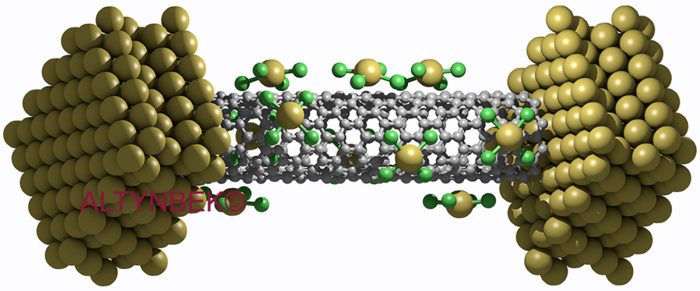
Combined with DFT for quantum electron transport in nanoscale devices, molecular junctions, and functionalized CNT sensors. Current-voltage (I-V) characteristics and conductance simulations.
Molecular Dynamics (MD)
Classical and ab-initio MD for large atomistic systems — structural optimization, thermal properties, phase transitions, and dynamic simulations.
Ab-Initio Methods & Codes
- FLAPW — Full-Potential Linearized Augmented Plane Wave.
- VASP — Vienna Ab initio Simulation Package
- LMTO — Linear Muffin-Tin Orbital method
- Dmol3 — Density functional theory code
- Quantum ESPRESSO — Open-source DFT suite
- SIESTA — Linear-scaling DFT with localized basis sets
- Smeagol — DFT + NEGF transport code (TCD)
- LAMMPS — Large-scale Molecular Dynamics
- NAMD — Nanoscale Molecular Dynamics
→
Scientific Tools
Density Functional Theory (DFT)
98%
VASP / Quantum ESPRESSO / SIESTA
95%
NEGF Quantum Transport
92%
High-Performance Computing
93%
Python & Scientific Stack
88%
Machine Learning / AI
92%
High-Performance Supercomputers
KAUST
Cray XC40 Supercomputer
- Performance7.2 PFLOPS theoretical · 5.5 PFLOPS sustained
- Cores197,568 Intel Haswell processor cores
- Memory790 TB total · 17 PB parallel file system
- NetworkDragonfly interconnect · 36 cabinets
XSEDE · USA
Extreme Science and Engineering Discovery Environment
- Lonestar302 TFLOPS · 22,656 cores · TACC, UT Austin
- Ranger579 TFLOPS · 62,976 cores · TACC, UT Austin
- Kraken112,896 cores · Cray XT5 · NICS, U. Tennessee
Scientific Applications
MATLAB
Mathematica
MathCad
COMSOL Multiphysics
Materials Studio
MedeA
OriginPro
Programming
Python
Fortran
Shell / Bash
Git
LaTeX
Java
Visualization & Analysis
Teaching Experience
4+ positions
Expand
Teaching Assistant — Advanced Topics in Materials Science
VASP Training Course Instructor
Graduate Teaching Assistant
Awards & Grants
7+ items
Expand
Highly Competitive Participation GrantMaterials for Energy Applications: Experiment, Modeling and Simulations Conference · Los Angeles, CA (2011)
Competitive Travel Grant15th International Workshop on Computational Physics and Materials Science: Total Energy and Force Methods · Trieste, Italy (2011)
Schearer Prize for Graduate ResearchMissouri S&T, Department of Physics (2008)
Graduate Research Poster AwardMissouri S&T, Department of Physics (2008)
UAE President's Gold Medal AwardUAE University (2007) — top graduating student
Outstanding Academic Performance AwardUAE University (2003–2005)
Mongolian President's Scholarship AwardUAE University (2002–2007) — highly competitive national scholarship
Peer-Reviewed Publications
10+ papers
Expand
Altynbek Murat, Masahiko Matsubara, Binh-Minh Nguyen, and Enrico Bellotti
Electronic Properties of Low-Σ Grain Boundaries in InAs
Physical Review Materials, 2, 123604 · 2018
Chieh-Szu Huang, Altynbek Murat, Vasudeo Babar, Enrique Montes, and Udo Schwingenschlögl
Adsorption of the Gas Molecules NH₃, NO, NO₂, and CO on Borophene
J. Phys. Chem. C. 122, 26, 14665 · 2018
Joshua Obodo, Altynbek Murat, and Udo Schwingenschlögl
Quantum Transport Through Tunable Molecular Diodes
Scientific Reports 7, 7324 · 2017
Altynbek Murat, Ivan Rungger, Stefano Sanvito, and Udo Schwingenschlögl
Mechanism of H₂O Induced Conductance Changes in AuCl₄ Functionalized CNTs
The Journal of Physical Chemistry C 119, 9568–9573 · 2015
Altynbek Murat, Ivan Rungger, Chengjun Jin, Stefano Sanvito, and Udo Schwingenschlögl
Origin of the p-Type Character of AuCl₃ Functionalized Carbon Nanotubes
The Journal of Physical Chemistry C 118, 3319–3323 · 2014
Altynbek Murat and Julia E. Medvedeva
Native Point Defects in Multicomponent Transparent Conducting Oxides
MRS Proc, 1633, 37–42 · 2014
Altynbek Murat, Alexander U. Adler, Thomas O. Mason, and Julia E. Medvedeva
Carrier Generation in Multicomponent Wide-Bandgap Oxides: InGaZnO₄
J. Am. Chem. Soc. 135, 5685–5692 · 2013
Altynbek Murat and Julia E. Medvedeva
Composition-Dependent Oxygen Vacancy Formation in Multicomponent Wide-Band-Gap Oxides
Physical Review B, 86, 085123 · 2012
Altynbek Murat and Julia E. Medvedeva
Electronic Properties of Layered Multicomponent Wide-Band-Gap Oxides: A Combinatorial Approach
Physical Review B, 85, 155101 · 2012
Nacir Tit and Altynbek Murat
Strain-Induced Band-Mixing Effects in ZnS/CdS (001) Superlattices
International Journal of Modern Physics B., 22 1997–2008 · 2008
Conference Presentations & Posters
24+ presentations
Expand
First-principles Investigation of Grain Boundaries in InAs
MRS Fall Meeting 2017 · Boston, MA, USA (Nov 29, 2017)
Modeling of Grain Boundaries in InAs
The II-VI Workshop · Chicago, IL, USA (Nov 1, 2017)
The Effect of Water on the Conductivity of Gas Sensors
KAUST-NSF International Conference · KAUST, KSA (March 16, 2016)
Mechanism of H₂O induced conductance changes in AuCl₄ functionalized CNTs
Psi-k 2015 Conference · San Sebastian, Spain (September 6–10, 2015)
Mechanism of H₂O induced conductance changes in AuCl₄ functionalized CNTs
APS March Meeting · San Antonio, TX, USA (March 2–6, 2015)
First-principles investigations of lead-free formamidinium based hybrid perovskites
APS March Meeting · San Antonio, TX, USA (March 2–6, 2015)
AuCl₄ functionalized carbon nanotubes: origin of the p-type doping
APS March Meeting · San Antonio, TX, USA (March 2–6, 2015)
A single diblock molecular diode
APS March Meeting · San Antonio, TX, USA (March 2–6, 2015)
Mechanism of H₂O adsorption on the conductance of functionalized CNTs
Applied Functional Materials Chemistry Conference · KAUST, KSA (October 27, 2014)
Carrier Generation in Complex Transparent Conductors: First-Principles Investigations
International Workshop on Nanomaterials and Advanced Energy Storage Systems · Nazarbayev University, Astana, KZ (Sept 9, 2014)
First-principles investigations of nanoscale sensors based on functionalized carbon nanotubes
4th Annual KICP Research Symposium · KAUST, KSA (April 29, 2014)
Transport calculations for functionalized carbon nanotubes
MRS Spring Meeting · San Francisco, CA, USA (April 24, 2014)
Origin of the p-type character of AuCl₃ functionalized CNTs
MRS Spring Meeting · San Francisco, CA, USA (April 22, 2014)
Functionalized carbon nanotubes: Origin of p-type doping
KAUST-Sydney Conference · KAUST, KSA (April 12, 2014)
P-type conductivity of AuCl₃ functionalized CNTs
KAUST-NSF Conference on Electronic Materials, Devices and Systems · KAUST, KSA (Feb 8–10, 2014)
Carrier Generation and Stability of Multicomponent Wide-Bandgap Oxides
MRS Fall Meeting · Boston, MA, USA (2013)
Complex oxides as novel transparent conductors
UAE University · Al-Ain, Abu Dhabi, UAE (Feb 21, 2013)
Investigation of defects in complex transparent conducting oxides
Missouri S&T · Rolla, MO, USA (2012)
First-principles investigations of transparent conducting oxides with tunable properties
Materials for Energy Applications · Los Angeles, CA, USA (2011)
Ab-initio investigations of complex oxides
APS March Meeting · Dallas, TX, USA (2011)
Systematic first-principles investigations of multicomponent main group metal oxides
MRS Fall Meeting · Boston, MA, USA (2010)
Ab-initio study on structural, optical, and electronic properties of fluorine doped oxides
Missouri S&T · Rolla, MO, USA (2008)
Workshops & Trainings
21 items
Expand
- KSL Workshop Towards High Efficiency Computing with Allinea
- XSEDE HPC Workshop: MPI
- Shaheen II Cray XC40 High Performance Supercomputing Workshop
- Intel High Performance Computing Workshop
- Workshop on Functional Nanomaterials: Design, Synthesis and Applications (Nano 2015)
- The Vienna Ab initio Simulation Package (VASP) & MEDEA Workshop
- Workshop on Functional Materials
- International Workshop on Spin-Orbit Torque 2015
- Second KAUST-NVIDIA Workshop on Accelerating Scientific Applications Using GPUs
- KAUST-NSF Research Conference on Electronic Materials, Devices and Systems for A Sustainable Future
- KAUST Solar Future 2014 Meeting
- Introduction to Maya 3D Software Workshop
- International Colloquium on Flexible Electronics and Photovoltaics
- 1st International Workshop on Spin-Orbit Induced Torque
- Winter Enrichment Program
- Saudi Arabian High Performance Computing User’s Group Conference
- 15th International Workshop on Computational Physics and Materials Science: Total Energy and Force Methods
- Student Leadership Conference
- UM-System Research Conference
- First International Biological and Medical Physics Conference
- NASA-ESA International Heliophysical Year Conference
Coursework
3 degrees
Expand
Some of the courses taken in my Ph.D. in Physics: (Total 107 hours)
- Condensed Matter Physics (Phys 481)
- Transport in Nanostructures (Phys 301)
- Mathematical Physics I (Math 402)
- Classical Mechanics I (Phys 409)
- Electrodynamics I (Phys 411)
- Electrodynamics II (Phys 423)
- Quantum Mechanics I (Phys 461)
- Quantum Mechanics II (Phys 463)
- Statistical Mechanics (Phys 413)
Some of the courses taken in my Master’s degree in Engineering Management: (Total 30 hours)
- Technology Innovation Management (Emgt 420)
- Global Project Management (Emgt 461)
- Investment (Emgt 480)
- Operations Management Science (Emgt 365)
- Project Management (Emgt 361)
- Economic Decision Analysis (Emgt 308)
- Management for Engineers & Scientists (Emgt 314)
- Financial Decision Analysis (Emgt 352)
Some of the courses taken in my Bachelor’s degree in Physics: (Total 132 hours)
- Thinking Skills
- Programming
- Classical Mechanics
- Electromagnetic Theory
- Thermal Physics
- Mathematical Physics
- Solid State Physics
- Quantum Mechanics
- Atomic & Molecular Physics
- Advanced Chemistry
- Radiation Physics
- Statistical Physics
- Nuclear Physics
- Modeling of Physical Systems
- Laser Physics
- Modern Physics I & II
Posts
9+ posts
Expand
Computation
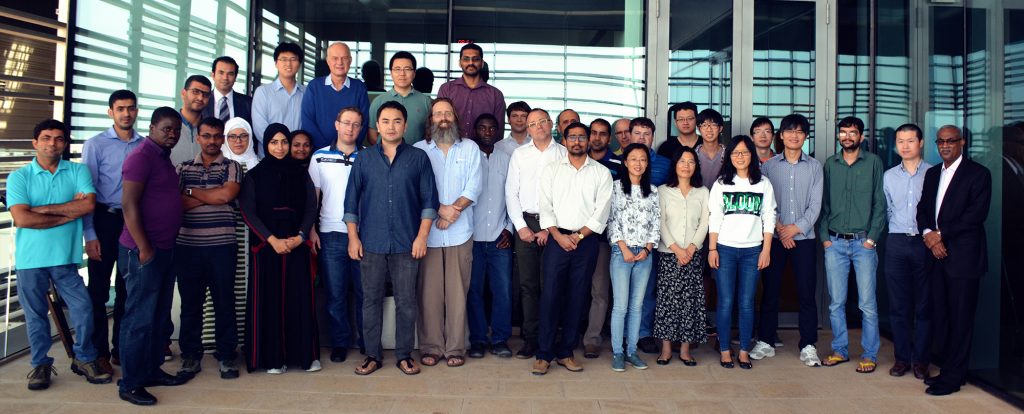
Advanced VASP workshop at KAUST with Dr. Martijn Marsman — hybrid functionals, GW, BSE, and ACFDT (RPA) methods. May 2016.

Tools
Version control for computational scientists — repositories, branches, and collaborative workflows for research code. Apr 2016.

Programming
Resources and IDEs for researchers — NumPy, SciPy, Matplotlib, and scientific computing. Jan 2016.
Conference
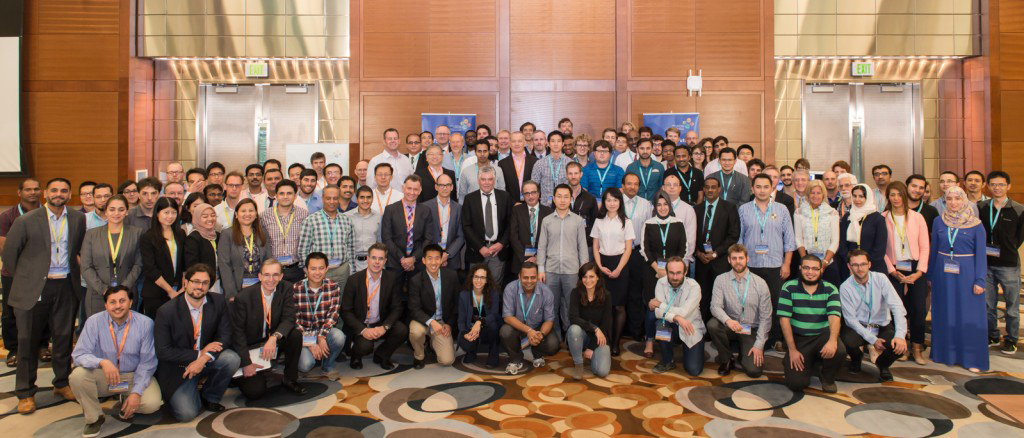
KAUST's solar energy symposium — perovskite stability, charge carrier diffusion, and the future of hybrid tandem solar cells. Nov 2015.
Conference
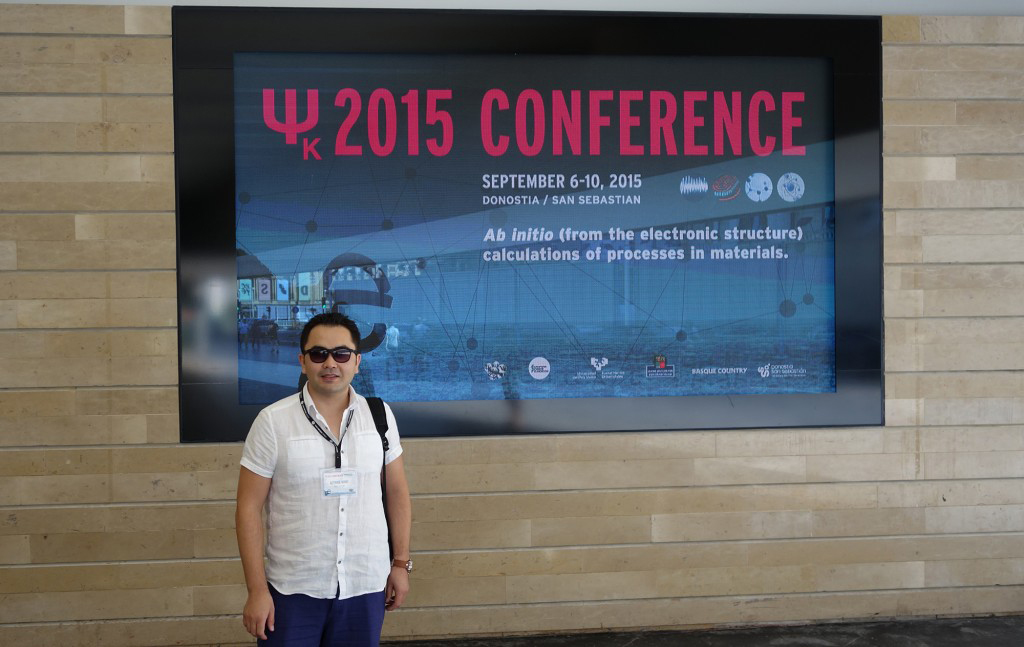
Global electronic structure conference in San Sebastian — ML in materials modeling, novel 2D materials, quantum transport. Sep 2015.

Materials Informatics
DFT-computed properties for 60,000+ inorganic materials. Pymatgen, FireWorks, and high-throughput workflows. Sep 2015.
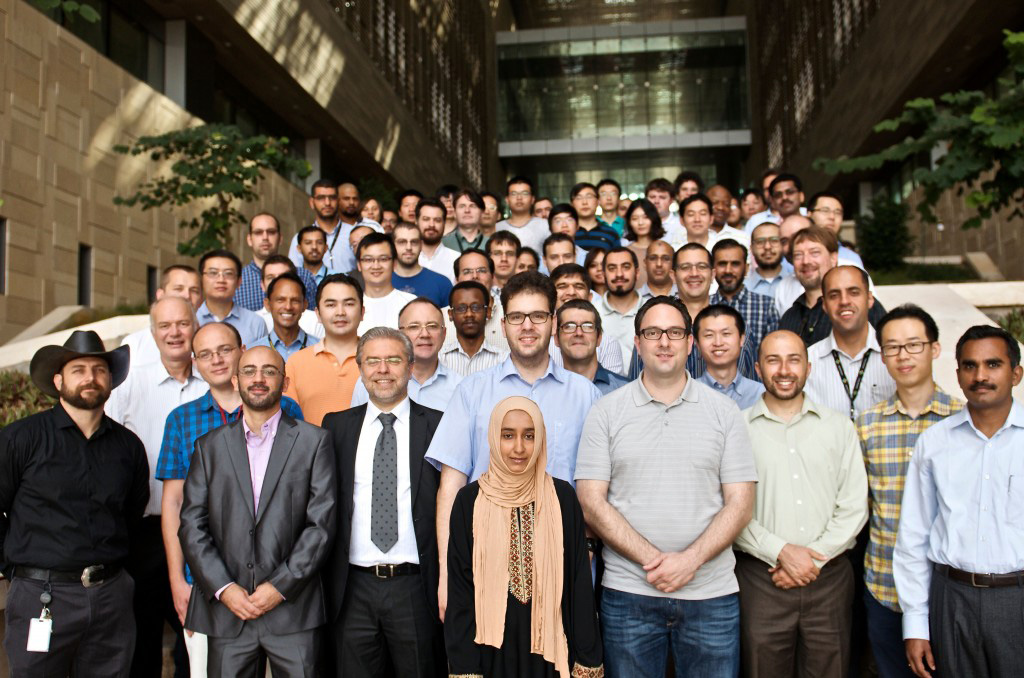
HPC
KAUST's new Cray XC40 — 7.2 PFLOPS, 197,568 cores, 17 PB storage — 25× Shaheen I capability. Jun 2015.
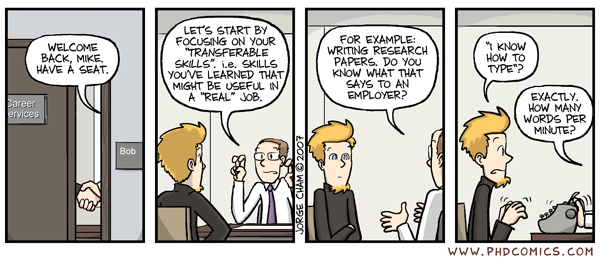
Career
Analysis, leadership, project management, and communication skills that Ph.D. researchers develop. Oct 2013.
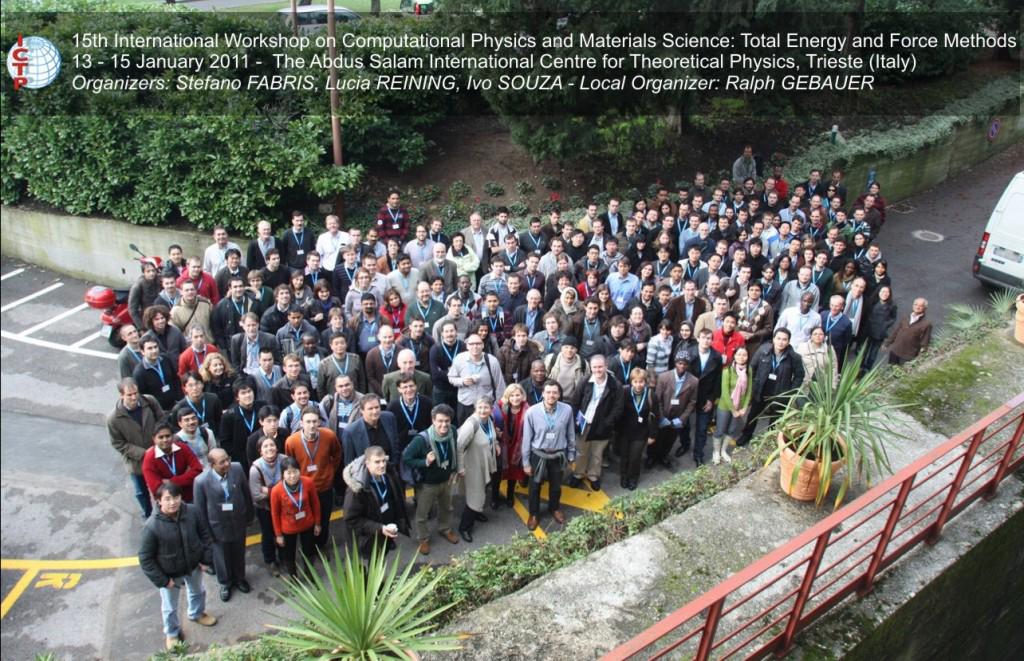
Computation
Intensive hands-on training at ICTP Trieste — 15th International Workshop on Computational Physics and Materials Science. Jan 2011.